All You Need is Love and a Dog Named Die
A Designer’s First Look: Charm with Quiet Confidence
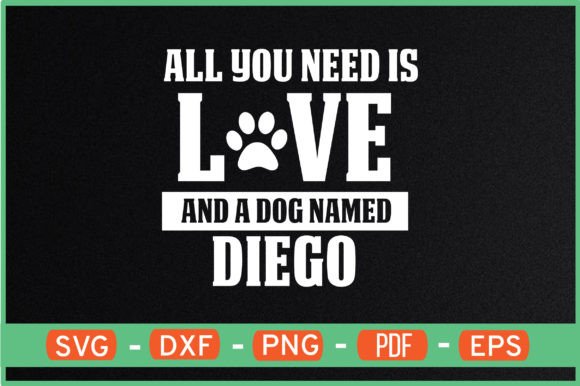
When All You Need is Love and a Dog Named Die landed in my inbox, I paused—not because it screamed for attention, but because it invited quiet consideration. As an embroidery designer who’s stitched hundreds of phrases onto baby onesies, tote bags, and boutique aprons, I know how easily “cute” can tip into cluttered or forgettable. This one doesn’t. It’s warm, slightly wry, and unmistakably handmade in spirit—like something you’d sketch in the margin of a dog-eared novel. The layout balances open space with intentional weight: “All You Need is Love” arcs gently overhead, while “and a Dog Named Die” sits lower, grounded by a subtle paw print or bone motif (depending on version). No excessive flourishes. No forced whimsy. Just clear, confident lettering with breathing room—exactly what makes a machine embroidery design hold up across real-world projects.
Stitching It Into Real Life: A Tote Bag Test Run
Last week, I used All You Need is Love and a Dog Named Die to embroider a natural canvas tote for a local pet-friendly café’s holiday pop-up. Why this design? Because it lands right where sentiment and specificity meet—ideal for small shop products that need personality *and* clarity at arm’s length. On 12-oz canvas with medium-weight cutaway stabilizer, the satin stitch held crisp edges on the curves of “Love” and “Die,” and the fill stitch in the paw icon stayed dense without puckering. Customers paused mid-aisle—not just to smile, but to read it twice. That’s the quiet power of smart typography in embroidery: legibility at 3 feet, warmth at 3 inches.
Where It Shines—and Where to Pause
All You Need is Love and a Dog Named Die works beautifully on custom apparel like crewneck sweatshirts (left-chest placement), tea towels (centered above the hem), and pillow covers (corner or center-block). Its moderate height and generous letter spacing make it forgiving on textured fabrics—think terry cloth, linen blends, or brushed cotton. As a tote bag design or embroidered patch, it reads cleanly even at 3.5" wide.
That said, tread thoughtfully on stretchy knits or thin baby jersey. The phrase’s horizontal flow demands stability—so double-layer stabilizer is non-negotiable for onesies or caps. Avoid dense black-on-black combos unless you’re using high-contrast thread (e.g., cream on charcoal). And while the design avoids tiny lettering, the lowercase “i” in “Die” and fine interior curves of the paw benefit from a test stitch on scrap fabric first—especially if you’re planning commercial embroidery runs for Etsy sellers or craft fair inventory.
What It Adds to Your Finished Product
This isn’t just text—it’s tone. When stitched onto a handmade product, All You Need is Love and a Dog Named Die signals intentionality. It tells customers you didn’t grab the first “dog mom” graphic online; you chose something with rhythm, restraint, and a whisper of wit. That builds trust. For small shop owners, that translates to repeat buyers. For Etsy sellers, it lifts listings out of generic search noise—especially when paired with thoughtful printable mockups showing the design on oatmeal linen or heather grey sweatshirts. And yes, it’s gift-ready: a baby embroidery piece feels tender, not trite; a holiday embroidery gift feels personal, not mass-produced.
Designer Notes You’ll Actually Use
- Always test on scrap fabric matching your final project’s weight and stretch—even if you’ve stitched similar phrases before.
- Check thread color contrast in natural light *and* under store lighting. What reads well on screen may vanish on dark fabric.
- Review stitch density in your embroidery software. If fill areas look overly heavy, reduce density by 5–8% for breathable fabrics.
- Confirm hoop size compatibility. This design fits comfortably in a 4x4 hoop—but verify before hooping expensive garments.
- Inspect small details like the curve of the “D” in “Die” and negative space inside the paw. These define clarity.
- Test black-and-white mockups to assess silhouette strength—critical for branding consistency across your craft business.
- Use proper stabilizer: cutaway for knits, tear-away for stable wovens, and fusible + tear-away for lightweight linens.
- Confirm licensing terms before selling finished items or bundling as part of digital embroidery file collections.
Final Thought: A Design That Serves the Maker
All You Need is Love and a Dog Named Die doesn’t ask you to overcomplicate it. It’s not an applique design begging for extra layers or a decorative accent demanding sequins. It’s a clean, capable embroidery file—rooted in Crafts, delivered as Graphics—that earns its place on real things people love and use. Whether you’re stitching for a client, prepping a batch of small shop products, or designing your next Etsy listing, this phrase carries weight without heaviness. It’s proof that sometimes, the most effective design assets are the ones that feel like they’ve always belonged—right where your needle lands.