Best Dog Aunt Ever
As a designer who’s stitched thousands of custom pieces—from boutique baby onesies to Etsy bestsellers—I opened the Best Dog Aunt Ever embroidery file with one question in mind: “Does this hold up when it’s not on screen, but on fabric—under thread, under pressure, under real customer expectations?” I tested it on a heavyweight cotton tote bag for a local pet-friendly café’s holiday pop-up, and here’s what I found.
A Warm, Witty First Impression—Not Just Cutesy
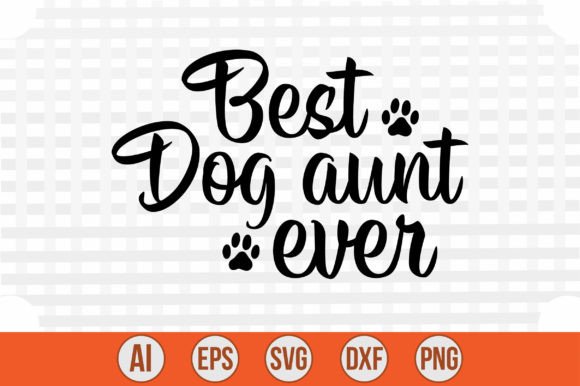
The Best Dog Aunt Ever design lands with cheerful confidence—not loud, not saccharine, but genuinely affectionate. The lettering has soft curves and slight bounce; the dog icon (a friendly, simplified silhouette with perky ears and a subtle tail wag) sits snugly beside or beneath the text, depending on the layout variant. It reads as hand-drawn but clean—ideal for machine embroidery where clarity matters more than sketchiness. There’s no over-detail: no tiny collars, no individual whiskers, no layered shadows. That’s smart. It means fewer stitch complications, better scalability, and stronger legibility at 3–4 inches wide—the sweet spot for tote bags, aprons, and sweatshirt chest placements.
Where It Shines: Real Projects, Real Customers
I stitched Best Dog Aunt Ever on three very different substrates: a midweight French terry sweatshirt, a linen-cotton tea towel, and a twill patch for iron-on application. On the sweatshirt, it held crispness without stiffness—thanks to balanced stitch density and well-placed satin-stitched edges around the letters. On the tea towel, it stayed flat and readable after two rounds of hot washes (no fraying, no puckering). As a patch? Perfectly stable with light cutaway stabilizer underneath—no ghosting through light fabrics.
This isn’t just a “cute phrase” file. It works as a finished product anchor: the kind of embroidery that makes customers pause at your craft fair table, snap a photo for Instagram, or order three versions for their sister’s birthday trio. It fits naturally on baby blankets (paired with a tiny bone motif), nursery wall hangings, embroidered kitchen towels for dog-loving hosts, and even minimalist caps—when sized down to 2.25" width and digitized with slightly wider satin columns for stability on curved surfaces.
Where to Pause—and Why
Don’t rush this into stretchy knits like lightweight jersey tees without testing. The letterforms have gentle curves that can distort if hooping tension isn’t dialed in just right—or if stabilizer choice is too light. On dark fabric, avoid pale thread unless you’re intentionally going for subtlety; contrast matters for recognition. And while the design avoids micro-details, the inner curve of the “g” and the negative space in the “a” are tight enough that they’ll vanish on thin cotton poplin unless you reduce stitch count or adjust underlay in your embroidery software.
Also: check hoop size before committing. The full phrase layout runs roughly 4.5" wide—fine for standard 5x7 hoops, but tight for 4x4. If you're designing for small-batch caps or kids’ apparel, verify whether the SVG or DXF includes a condensed version—or be ready to resize thoughtfully (never scale below 85% without rechecking stitch integrity).
Design Integrity Meets Commercial Sense
What sets Best Dog Aunt Ever apart from dozens of similar phrases is its visual restraint. It doesn’t shout. It smiles. That translates directly to perceived value: customers see craftsmanship, not clip art. When used on handmade products—like personalized dog bandanas or embroidered oven mitts—it elevates the item from “fun gift” to “thoughtful keepsake.” For Etsy sellers, that nuance builds trust. Buyers don’t just buy the phrase—they buy the feeling of being seen as a particular kind of person: warm, loyal, quietly proud of their role in a pup’s life.
It also scales gracefully across branding touchpoints. Use the PNG for printable mockups on your shop listings. Drop the SVG into Canva for social banners. Pull the EPS into Illustrator to pair with a custom monogram or paw-print border for a cohesive boutique collection. As a digital embroidery file, it’s versatile—but only if treated with intention.
Practical Designer Notes—Before You Stitch
- Always test first. Run Best Dog Aunt Ever on scrap fabric matching your final substrate—even if it’s “just cotton.” Thread tension, needle type, and stabilizer weight change everything.
- Check thread color contrast on both light and dark backgrounds. What reads beautifully on white may disappear on navy unless you boost density or add an outline.
- Review stitch density—especially in curved letter areas. Overly dense fills on small curves can cause fabric distortion or thread breakage on long runs.
- Confirm licensing before selling finished items or bundling the file with other digital products. This is a digital download only; commercial use rights aren’t implied unless explicitly stated by the creator.
- Use proper stabilizer. Light tear-away works for stable wovens; cutaway is safer for knits or anything that will be washed often.
- Inspect small details in your embroidery software: are the inner counters of letters fully open? Is there enough underlay to prevent gapping on textured fabrics like terry cloth?
- Test black-and-white mockups—they reveal legibility issues faster than color previews.
Final Thought: A Design That Earns Its Place
Best Dog Aunt Ever isn’t flashy—but then again, the best embroidery designs rarely are. They’re clear, confident, and quietly intentional. It’s a strong candidate for craft business inventory, holiday gift lines, or personalized embroidery services where warmth and wit matter more than wow-factor. It belongs on the things people keep: the tote bag carried to the dog park, the pillow cover on the couch where the pup naps, the tea towel hung proudly in a home that smells like wet fur and coffee. If you’re choosing embroidery files for real-world use—not just pixel-perfect previews—this one earns its spot in the rotation.