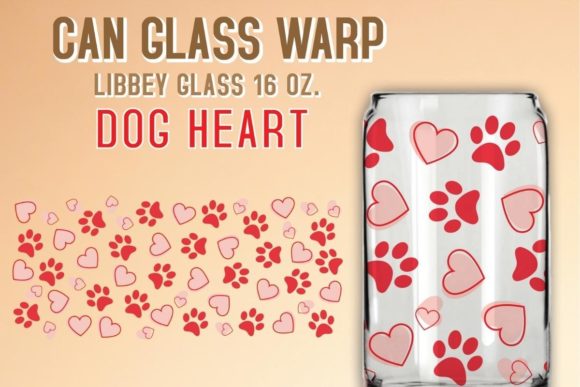
Dog Paw Glass Can Wrap Cut File
First Impression: Sweet, Simple, and Surprisingly Versatile
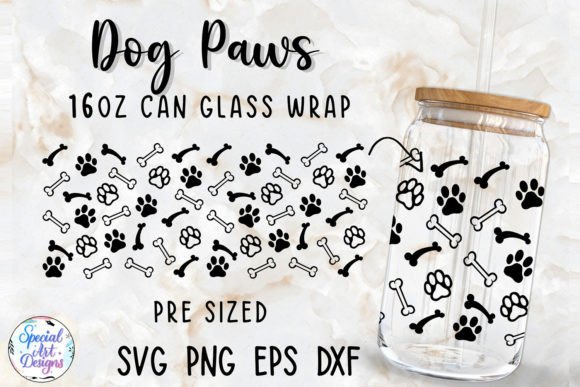
When I opened the Dog Paw Glass Can Wrap Cut File, I didn’t see just a paw print—I saw a quiet moment of connection. It’s clean-lined, gently rounded, and balanced—not too busy, not too sparse. The shape feels intentional: wide enough to read clearly on a curved surface, but compact enough to avoid overwhelming smaller items. As a designer who’s stitched hundreds of pet-themed motifs, I appreciate how this one avoids cliché. There’s no cartoonish grin or exaggerated claws—just a soft, confident silhouette that reads as warm, loyal, and quietly joyful. It lands somewhere between rustic charm and modern minimalism, which makes it unusually flexible across product types.
A Real-World Test: Turning It Into a Handmade Tote Bag for a Local Dog Rescue Fundraiser
Last week, I used the Dog Paw Glass Can Wrap Cut File as the centerpiece for a limited-run embroidered canvas tote—intended for a dog rescue’s summer adoption event. I paired it with a simple “Paws Up” script (not included) and stitched it onto natural unbleached cotton. The result? Instant recognition, zero confusion, and genuine smiles from volunteers holding the bags. Customers didn’t just see a design—they saw intention. That matters. In handmade product markets, especially for cause-based or boutique goods, emotional resonance often carries more weight than technical perfection. This cut file delivered that, right out of the gate.
Where It Shines in Embroidery Projects
- Custom apparel: Works beautifully on crewneck sweatshirts—especially over left-chest placement—where the paw’s gentle curve echoes the shoulder slope.
- Tote bag design: Holds clarity even at 3.5" wide; no stitch loss in corners or thin lines.
- Embroidered patch: Clean outer edge means crisp heat-applied or sewn-on results without fraying concerns.
- Baby embroidery: Soft shape reads well on onesies and burp cloths—no sharp angles or tiny details that snag or irritate delicate skin.
- Holiday embroidery: Paired with red-and-khaki thread, it becomes an understated yet meaningful ornament or stocking accent.
- Craft business & Etsy seller use: Easily styled in mockups for listings—looks cohesive with neutral backdrops, linen textures, and matte ceramics.
Where to Proceed With Care
The Dog Paw Glass Can Wrap Cut File is thoughtful—but not foolproof. Here’s where attention pays off:
- Small hoop sizes: If your machine’s smallest hoop is under 4", test placement first—the paw’s width may push close to the edge. Trimming isn’t ideal here; better to reposition or adjust scale slightly.
- Textured fabrics: On heavy twill or terry cloth, the outer outline may soften. A medium tear-away stabilizer + tight satin stitch tension keeps edges defined.
- Dark fabric: Light thread (ecru, light gray, or pale tan) lifts the design without glare—avoid stark white unless you want high contrast.
- Curved surfaces (like caps): Not designed for 3D curvature. Use only on flat panels—e.g., front panel of a structured cap—not the crown or curve of a flex-fit.
- Frequent-wash items: While the shape itself is durable, avoid dense fill-stitch variations if stitching on kitchen towels or baby bibs. A balanced mix of satin and running stitch holds up best.
What It Adds—Beyond the Stitch
This isn’t just a graphic—it’s a subtle trust signal. When customers see a clean, well-proportioned paw like this on a personalized gift or small shop product, they register care. No pixelation. No awkward spacing. No visual noise. That translates directly into perceived value: buyers pay more for handmade products that *feel* considered, not assembled. For Etsy sellers and craft fair vendors, that distinction builds repeat loyalty. And for commercial embroidery shops? It’s a reliable, low-risk add-on for pet-lover bundles—pair it with a name banner or birth year, and you’ve got a complete custom set.
Practical Designer Notes Before You Stitch
- Always test the Dog Paw Glass Can Wrap Cut File on scrap fabric matching your final project’s weight and weave.
- Check thread color contrast in natural light—not just on screen. What reads well digitally can vanish on oatmeal linen.
- Review stitch density: if your version includes fill areas, ensure they’re not overly dense for lightweight cotton or knits.
- Confirm hoop size compatibility before loading—especially if working with older machines or compact hoops.
- Inspect small details: does the toe pad area hold definition? If not, consider simplifying or adjusting underlay.
- Test in black-and-white mockups: if it loses personality without color, it may need slight bolding in the vector stage.
- Compare performance on light vs. dark fabric backgrounds—some outlines behave differently depending on base tone.
- Use appropriate stabilizer: cut-away for knits, tear-away for stable wovens, and fusible for lightweight linens.
- Verify licensing: since this is listed under Graphics and Crafts, confirm whether personal use, small-batch sales, or digital resale are permitted before listing finished items or reselling the file.
Final Thought: A Quiet Design That Does Quiet Work
The Dog Paw Glass Can Wrap Cut File won’t shout—but it doesn’t need to. In a market flooded with overdesigned, overcomplicated motifs, its restraint is its strength. It fits seamlessly into nursery decor, boutique merchandise, holiday collections, and everyday handmade gifts—not because it’s flashy, but because it’s honest. As an embroidery designer and reviewer, I don’t reach for every new file. But this one? I’ve already added it to my go-to folder for client consultations, craft fair prep, and small-batch gifting. It’s the kind of design that earns repeat use—not because it’s trendy, but because it simply works.