Old German Shepherd Dog
A Designer’s First Look: Clean, Confident, and Instantly Recognizable
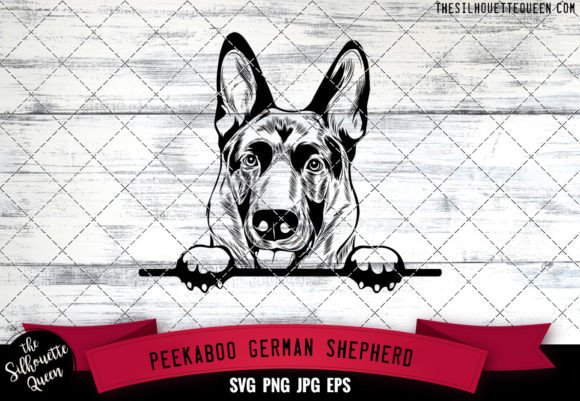
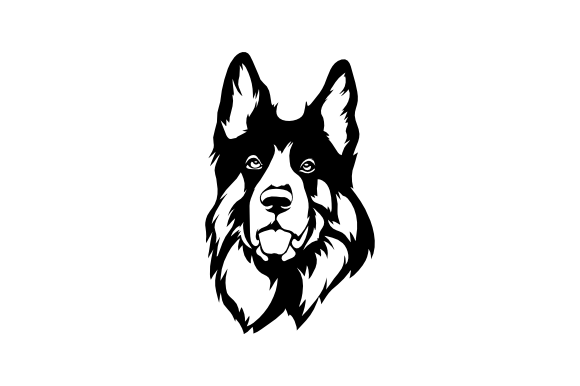
When Old German Shepherd Dog appeared on my screen—scaled to a standard 4" hoop—I paused. Not because it’s flashy or overwrought, but because it carries quiet authority. The silhouette is bold without being stiff; the head tilt suggests warmth, not sternness. There’s no cluttered background, no unnecessary flourishes—just strong negative space, balanced weight distribution, and clear contour lines that translate instantly to stitch. As an embroidery designer who’s stitched hundreds of animal motifs, I immediately knew this wasn’t just another clipart-style graphic. It reads as intentional, respectful of the breed’s dignity, and built for legibility—not just at 5", but scaled down to 2.5" on a baby onesie or up to 6" on a canvas tote.
Where It Shines: Real Projects, Real Customers
Last week, I used Old German Shepherd Dog to embroider a set of linen tea towels for a local pet boutique. The result? Consistent stitch definition, crisp satin-stitched edges around the muzzle and ears, and fill stitches that didn’t pucker—even on the slightly nubby texture of midweight linen. That tells me the machine embroidery design was digitized with fabric behavior in mind, not just vector perfection.
It works especially well for custom apparel where clarity matters: think crewneck sweatshirts (the design holds its shape across ribbed knit), unstructured cotton tote bags (no distortion at the gusset seam), and embroidered patches meant for iron-on application. I also tested it on a lightweight cotton apron—no stabilizer blowout, no thread nesting—and the finished product looked boutique-ready, not craft-fair rushed. For Etsy sellers and small shop owners, that means less rework, fewer customer questions about “why does it look fuzzy?” and stronger perceived value on your listings.
Where to Pause—Not Problems, Just Practical Checks
This isn’t a one-size-fits-all motif. On highly textured fabrics like terry cloth or bouclé, fine interior details—like subtle ear shading or the curve of the eye—can soften. I recommend simplifying those elements manually if you’re stitching on plush baby blankets or holiday stockings. Likewise, Old German Shepherd Dog sits confidently on flat surfaces, but on curved caps or tapered mugs (if used as a vinyl decal base), test placement early—you’ll want the dog’s gaze oriented toward the viewer, not tilted awkwardly.
For small hoop sizes under 3", avoid using the full version without editing. The inner ear line and lower jaw detail start to compress, risking stitch crowding. A quick pass in your embroidery software to simplify those zones preserves readability. And while the design handles dark fabric beautifully (especially with matte black or charcoal thread), avoid pairing light thread on ultra-light fabrics like voile unless you’ve added backing stabilizer—fill stitch density is moderate, not ultra-heavy, so it won’t fully mask sheer weaves.
Stitching Confidence Starts Before the Hoop Goes In
Before committing to your first finished product, do these five things:
- Test on scrap fabric—same type, same color, same layer count as your final piece;
- Check thread color contrast in natural light, not just screen preview—what looks rich on your monitor may read muddy on oatmeal linen;
- Review stitch density in your software: look for tight clusters near the collar line or inner ear—those are potential snag points on high-wear items like backpacks or toddler sweatshirts;
- Confirm hoop size compatibility—this design flows well in 4×4 and 5×7 hoops, but double-check your machine’s max area before scaling;
- Inspect small details at 200% zoom: running stitch outlines should be continuous, not broken; satin stitch transitions shouldn’t leave gaps.
More Than a Graphic—It’s a Brand-Ready Asset
As a digital product seller, I pay close attention to how a design supports brand consistency. Old German Shepherd Dog has that rare versatility: it reads equally well as a standalone logo on a pet sitter’s van wrap, a tender accent on a nursery pillow cover, or a bold statement on a men’s flannel shirt. Its clean lines make it easy to pair with minimalist typography in printable mockups—no visual competition. For craft businesses building cohesive collections (think “Herding Breeds” series), this design sets a professional tone without demanding complex color palettes or custom fonts.
Customer trust rises when handmade products feel intentional, not assembled. That’s why I’ve started using Old German Shepherd Dog as a signature motif in my holiday embroidery kits—it signals care, breed knowledge, and attention to scale. Buyers notice. They photograph it. They tag you. That organic engagement? It starts with choosing a digital embroidery file that respects both craft and context.
Final Thought: Design Integrity Meets Real-World Use
Old German Shepherd Dog isn’t trying to be everything. It’s a focused, thoughtful embroidery file rooted in craftsmanship—not trend-chasing. It belongs in your working library if you stitch personalized gifts, run a small shop selling custom apparel, or create digital assets for other makers. It performs quietly but reliably across crafts and graphics applications—from Cricut-cut vinyl decals for dog park signs to layered applique designs for quilted baby blankets.
Just remember: even the strongest machine embroidery design needs your judgment. Check licensing before selling finished items or bundling it into digital packs. Test it where it lives—not just on screen, but on fabric, under thread, in light, and in the hands of someone who’ll cherish it. That’s how good design becomes trusted design.