Brain - Dog Bone: A Designer’s Real-World Embroidery Review
First Impressions: Clever, Compact, and Instantly Recognizable
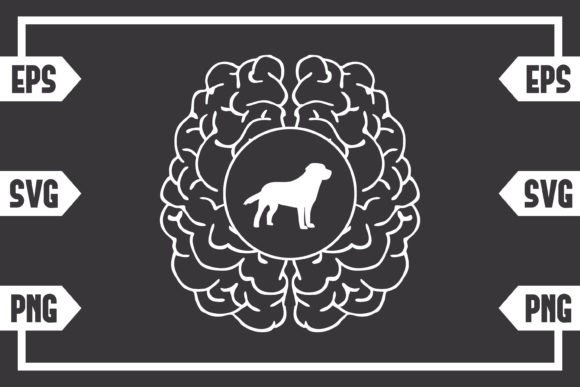
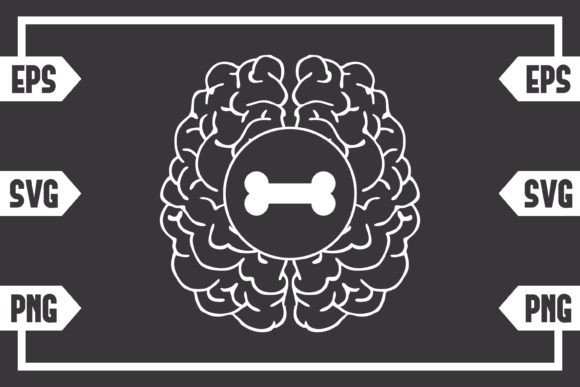
Opening the Brain - Dog Bone SVG file, I immediately noticed how tightly balanced it is—no wasted space, no visual clutter. The brain shape is stylized but anatomically suggestive, and the dog bone integrates cleanly into its base like a natural extension. It’s not cartoonish, nor overly clinical—it lands somewhere between playful science and pet-loving charm. That duality makes it unusually versatile: think neuroscientist’s baby onesie, vet clinic staff apron, or a witty embroidered tote for a dog trainer who also teaches biology. As a machine embroidery design, it reads well at a glance—critical when your finished product needs to communicate fast, especially on small items like caps or patches.
Real Project Test: Stitching It onto a Linen Kitchen Towel
I tested Brain - Dog Bone as a centered chest emblem on a medium-weight linen tea towel—exactly the kind of handmade product Etsy sellers and boutique kitchen shops love. Using a 4" hoop and medium tear-away stabilizer, the design stitched cleanly with minimal thread breaks. The curves held their shape, and the bone’s tapered ends didn’t pull or distort. What stood out most was how legible it remained at ~3.5" wide—no blurring, no lost definition in the sulci lines of the brain. That’s a strong sign the vector art translates well to embroidery digitizing (even if you’re doing that conversion yourself or outsourcing it). For craft business owners, that means less time tweaking and more time listing.
Where It Shines—and Where It Needs Thought
Brain - Dog Bone excels in custom apparel and personalized gifts where personality matters more than precision. On a heavyweight cotton sweatshirt? Confident and cozy. On a baby onesie? Adorable without being cloying—parents appreciate smart humor that doesn’t shout. As an embroidered patch? It works beautifully as a standalone motif on denim jackets or backpacks. And for holiday embroidery—say, a “Neuro-Grateful” mug towel set—it adds wit without sacrificing warmth.
But here’s what I watched closely: fine detail retention on textured fabrics. On terry cloth towels or bouclé knit caps, the subtle grooves in the brain shape softened slightly. Not a dealbreaker—but a reminder to test on your exact fabric first. Also, avoid using it full-size on thin or stretchy knits (like lightweight tees) without proper cut-away stabilizer underneath. The design’s moderate stitch density holds up well, but it’s not built for ultra-dense fill work—so don’t try to scale it down below 2" without checking corner clarity in your embroidery software preview.
Commercial Use Reality Check for Sellers and Makers
If you’re an Etsy seller or small shop owner building a cohesive line—say, a “Science + Snacks” collection for pet-loving educators—Brain - Dog Bone slots in naturally as a signature graphic. It supports brand consistency without locking you into one niche: pair it with minimalist typography for lab-coat embroidery, or layer it with paw prints for a vet-themed gift set. As a digital embroidery file, its SVG format gives flexibility—you can resize it cleanly for different hoop sizes, adapt it for applique design with satin-stitch borders, or even convert parts to running stitch for sketch-style outlines.
That said, remember: this is a Graphics file—not a pre-digitized embroidery file. So while it’s perfect for Cricut Explore or Silhouette Designer Edition users doing iron-on transfers or vinyl cuts, embroidery requires additional digitizing. Don’t assume it’s ready to load into your Brother or Bernina machine straight from the ZIP. If you’re new to converting vectors for stitching, budget time (or a small fee) for professional digitizing—especially if you plan to sell the finished product commercially.
Practical Designer Notes You’ll Actually Use
- Always stitch a test run—not just on scrap fabric, but on the same fabric type and color you’ll use for your final product. Thread color contrast changes everything; a charcoal grey brain pops on ivory linen but disappears on heather grey cotton.
- Review stitch density in your embroidery software before hooping. Look for tight clusters near the bone’s tip or the brain’s base—those areas may need slight underlay adjustment for stability on stretchy or napped fabrics.
- Confirm hoop size compatibility. At standard scaling, this fits comfortably in a 4×4 hoop—but double-check before committing to a cap or curved surface where re-hooping isn’t practical.
- Test black-and-white mockups before listing. Does it read clearly in thumbnail size? Will customers recognize the concept instantly on a mobile screen? Brain - Dog Bone passes this test—but only because its silhouette is distinct and uncluttered.
- Check licensing terms carefully. Since this is a digital download for Crafts, verify whether resale of finished embroidered items is permitted—and whether you may use it in printable mockups or digital product previews. When in doubt, contact the creator directly.
Final Thought: A Quietly Confident Design Asset
Brain - Dog Bone won’t scream for attention—but it earns trust. That’s rare in a crowded market of novelty embroidery files. It feels intentional, not algorithm-generated. It respects the craft: simple enough to stitch reliably, expressive enough to resonate. Whether you’re embroidering a nurse’s scrub cap, a teacher’s conference tote, or a groomsmen’s pocket square for a vet-school wedding, it adds quiet character—not gimmickry. For creative entrepreneurs building real handmade products—not just downloads—this is the kind of design asset that quietly lifts perceived value, encourages repeat buyers, and sparks genuine “Where’d you get that?!” moments. Just remember: its strength lies in thoughtful application, not automatic execution. Treat it like a solid sketch—not a finished painting—and you’ll get exactly what you need: clarity, charm, and commercial readiness.