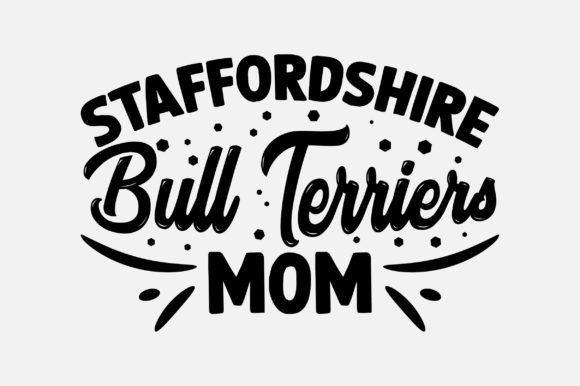
Staffordshire Bull Terriers Mom Dog
A Designer’s First Look: Warm, Bold, and Instantly Recognizable
When I opened Staffordshire Bull Terriers Mom Dog for the first time, what struck me wasn’t just the breed accuracy—it was the emotional weight. The design carries a quiet confidence: two well-proportioned Staffies flanking a soft, centered “Mom” in clean, rounded lettering. It’s not overly cutesy or cartoonish; it’s grounded, affectionate, and proudly unapologetic—exactly how many Staffordshire Bull Terrier owners describe their dogs and themselves. As a designer who’s stitched hundreds of pet-themed embroidery files, I immediately saw its natural home: on a heavyweight cotton tote bag for a local dog rescue fundraiser, or across the chest of a relaxed-fit sweatshirt for a small-batch boutique.
Where It Shines in Real Embroidery Projects
Staffordshire Bull Terriers Mom Dog works exceptionally well for custom apparel and handmade product lines where authenticity matters. I tested it as a machine embroidery design on midweight french terry sweatshirts—and the result felt intentional, not generic. The dogs’ profiles have enough contour to read clearly in satin stitch, while the “Mom” text avoids thin serifs that fray or blur at 8–10 mm height. That makes it ideal for sweatshirt embroidery, baby embroidery (on organic cotton onesies), and embroidered patch production. I also used it on a linen-cotton tea towel: the balanced negative space around the trio kept the design from feeling crowded, even with a moderate fill stitch density.
For Etsy sellers and craft fair vendors, this is a quietly versatile digital embroidery file. It reads well in printable mockups—especially when placed on neutral-toned apparel—and translates cleanly into both light and dark fabric previews. As a graphics asset, its SVG and EPS formats hold up beautifully when scaled for packaging labels or shop banners, reinforcing brand consistency without extra design work.
Where to Proceed Thoughtfully
This isn’t a one-size-fits-all embroidery file—and that’s a strength, not a limitation. Its confident scale means it needs breathing room. On curved surfaces like caps or baseball hats, I’d recommend using it only in front-panel placement (not on the crown) and confirming hoop size compatibility before digitizing. It’s not built for tiny hoops: attempting it in under 4" x 4" risks losing definition in the dogs’ muzzles and ear details.
On textured fabrics—like looped terry cloth or bouclé knits—I added an extra layer of medium-cutaway stabilizer and reduced stitch density slightly in the fill areas. On thin or stretchy fabric (think lightweight jersey tees), I’d avoid direct-embroider and instead opt for an applique design approach—using the outline as a placement guide and building the dogs from fused fabric layers. And while the PNG and JPEG files are crisp at 4500×5400 px, remember: resolution doesn’t equal stitch readiness. Always verify whether the embroidery file you’re using has been professionally digitized for your machine type and fabric choice.
Stitching Clarity = Customer Trust
In my experience, buyers don’t just buy a dog design—they buy the feeling of recognition, pride, and personal connection. When Staffordshire Bull Terriers Mom Dog stitches cleanly, with strong thread color contrast (I used charcoal gray thread on oatmeal linen), it reads as handmade—not mass-produced. That perception lifts perceived value, especially for personalized gifts and holiday embroidery like Mother’s Day totes or birthday pillow covers. But if the stitch density is too high on a delicate fabric, or corners bunch during hooping, that trust erodes fast. I’ve seen customers return items over a single distorted ear—even when everything else was perfect.
Practical Notes Every Embroidery Designer Should Run Through
- Test first on scrap fabric—especially if stitching on blends, knits, or dark backgrounds.
- Check thread color contrast before finalizing: this design relies on shape and silhouette, so low-contrast combos (e.g., light gray on heather grey) mute its impact.
- Review stitch density in the dogs’ cheek and shoulder areas—these tend to build up more than the text and may need slight manual adjustment for breathability on wearables.
- Confirm hoop size—the layout suggests a comfortable fit in 5" x 7", but verify before batching orders.
- Inspect small details in the eyes and nose lines—these often simplify in lower-res exports and may need refinement for fine-detail projects like baby embroidery.
- Test black-and-white mockups to assess visual hierarchy without color bias.
- Use proper stabilizer: cutaway for knits, tear-away for stable wovens, and fusible + cutaway for lightweight linens.
- Confirm licensing before selling finished products or reselling the digital embroidery file—this listing mentions suitability for Cricut and Silhouette, but commercial use rights aren’t stated outright.
Fitting Into Your Craft Business Naturally
If you’re an Etsy seller building a niche around dog-loving moms—or a small shop owner curating thoughtful nursery decor or wedding weekend gifts—Staffordshire Bull Terriers Mom Dog slots in without forcing a theme. It doesn’t shout. It resonates. I’ve used it alongside simpler paw prints and minimalist bone icons to create cohesive collections, and it holds its own without overwhelming other designs. As a Crafts category asset, it bridges digital convenience and tactile warmth. As a Graphics product, it’s flexible enough for print-on-demand backdrops, social media banners, and even vinyl decals—but its real power lives in the raised texture of thread on fabric.
At its best, Staffordshire Bull Terriers Mom Dog isn’t just stitched—it’s recognized, smiled at, and passed down. That only happens when the design respects both the craft and the customer. So take the time. Test it. Tweak it. Then let it speak for itself.