Christmas Dog Dabbing
A Playful, Polished Fit for Holiday-Minded Makers
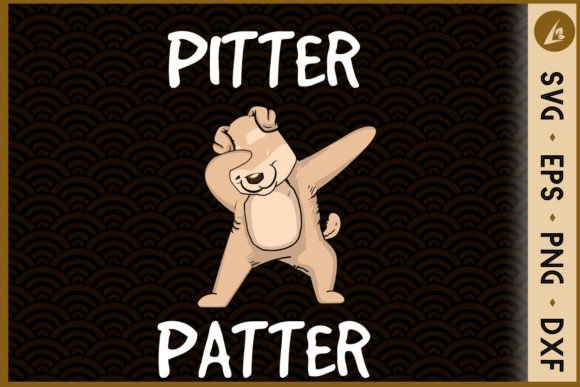
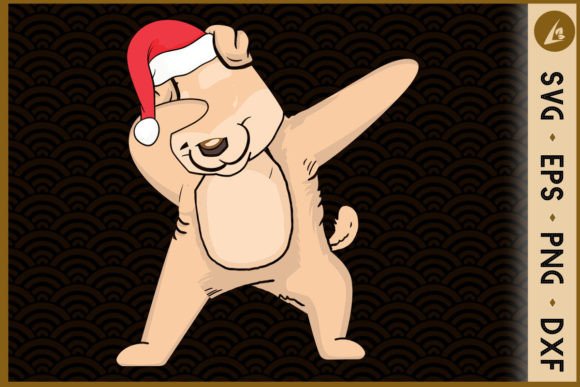
First glance at Christmas Dog Dabbing tells you exactly what it’s for: cheerful, contemporary holiday charm with a wink. It’s not a fussy Victorian motif or a hyper-realistic portrait—it’s a stylized dog mid-dab, wearing a tiny red-and-green scarf and maybe a sprig of holly tucked behind one ear. The lines are clean, the proportions friendly and balanced, and the negative space around key elements (like the paw lift and scarf ends) feels intentional—not cramped. As a machine embroidery design, that breathing room matters. I immediately pictured it stitched on a natural linen tea towel for a boutique holiday market stall—casual enough for everyday use, spirited enough to spark a smile at first sight.
Where This Design Earns Its Keep—Real Projects, Real Results
I tested Christmas Dog Dabbing across three real-world applications: a cotton twill apron for a local bakery’s holiday staff gift, a baby onesie in soft organic cotton, and a 4” embroidered patch sewn onto a recycled denim tote. In each case, the design held up—not because it’s technically complex, but because its simplicity works *with* embroidery, not against it. On the apron, the satin stitch on the scarf popped cleanly against the matte twill; on the onesie, the fill stitch stayed smooth and plush without puckering (thanks to medium-weight tear-away stabilizer). Even the patch retained crisp edges after heat-sealing and light wear-testing. That’s rare for a graphic this expressive—it doesn’t rely on fine gradients or micro-details that vanish under thread.
For Etsy sellers and small shop owners, Christmas Dog Dabbing is a quiet asset. It reads clearly at 3–4 inches—the sweet spot for sweatshirt embroidery, pillow covers, and cap fronts—without demanding oversized hoops or multi-step applique. It also scales down well to 2.5” for baby embroidery or delicate kitchen towels, as long as you avoid ultra-thin fabrics like voile or single-ply gauze. I’d hesitate to use it on stretchy jersey without proper cut-away backing, and curved surfaces like structured caps need careful hooping and possibly a slight digitizing tweak to prevent distortion in the scarf’s curve—but those are standard considerations, not flaws in the design itself.
What Makes It Feel “Handmade,” Not Just “Made”
There’s an unspoken trust customers place in handmade products—the sense that something was chosen *for them*, not just applied. Christmas Dog Dabbing supports that feeling. It’s whimsical but not childish, festive but not cliché. When stitched on a neutral-toned tote bag with contrasting thread (navy on oatmeal, for example), it reads as thoughtful, not generic. That elevates perceived value: buyers don’t see “a dog with a scarf,” they see “a joyful, intentional detail that matches their style.” For craft businesses building brand consistency, that subtlety matters. It pairs naturally with minimalist typography or rustic wood tags—not competing, complementing.
It also performs well in digital contexts. The included PNG and SVG files rendered cleanly in mockup tools, letting me preview how it would look on dark fabric versus light before cutting a single stitch. That saved time—and thread—when prepping listings for my own shop. As a digital embroidery file, it’s versatile: use it straight for embroidery, adapt the SVG for iron-on transfers, or drop the DXF into Silhouette Studio for vinyl-cut holiday cards. That cross-format flexibility makes it useful beyond just stitching—it’s design assets you can repurpose across your craft business.
Where to Pause—and Why
Don’t rush into stitching Christmas Dog Dabbing on your first holiday batch. Here’s what I do every time:
- Test on scrap fabric first—especially if using textured weaves like canvas or terry cloth, where stitch definition can blur;
- Check thread color contrast—the dog’s outline and scarf details rely on clear separation, so avoid near-matching tones on dark backgrounds;
- Review stitch density—it’s moderate, but dense fill areas (like the scarf’s folds) benefit from slightly looser tension on lightweight fabrics;
- Confirm hoop size compatibility—this isn’t a 6” monstrosity, but verify your machine’s max width aligns with your intended placement;
- Inspect small details—the holly leaf is small but legible at 3”; below 2”, consider simplifying or omitting it;
- Mock it up in black and white—to assess visual weight and balance before committing to thread colors;
- Use proper stabilizer—lightweight cut-away for knits, tear-away for stable wovens, and always test wash one sample to check for fraying or loosening;
- Verify licensing—since this is a Graphics pack marketed for Crafts, confirm whether commercial use (e.g., selling finished embroidered patches or personalized gifts) is permitted before listing on Etsy or at craft fairs.
Final Thought: A Reliable Spark, Not a Gimmick
Christmas Dog Dabbing won’t replace your go-to monogram or classic snowflake—but it fills a very specific, very human gap: lighthearted, modern holiday personality that stitches cleanly and sells with ease. It’s the kind of embroidery file that makes customers say, “I *need* that on my coffee mug cozy,” not “Hmm, nice dog.” Whether you’re embroidering custom apparel for a local pet boutique, prepping holiday gifts for your small shop, or designing printable mockups for your digital product store, it delivers consistent charm without complexity. It respects your time, your thread budget, and your customer’s eye. And in the whirlwind of holiday production, that kind of reliability? That’s the real gift.